
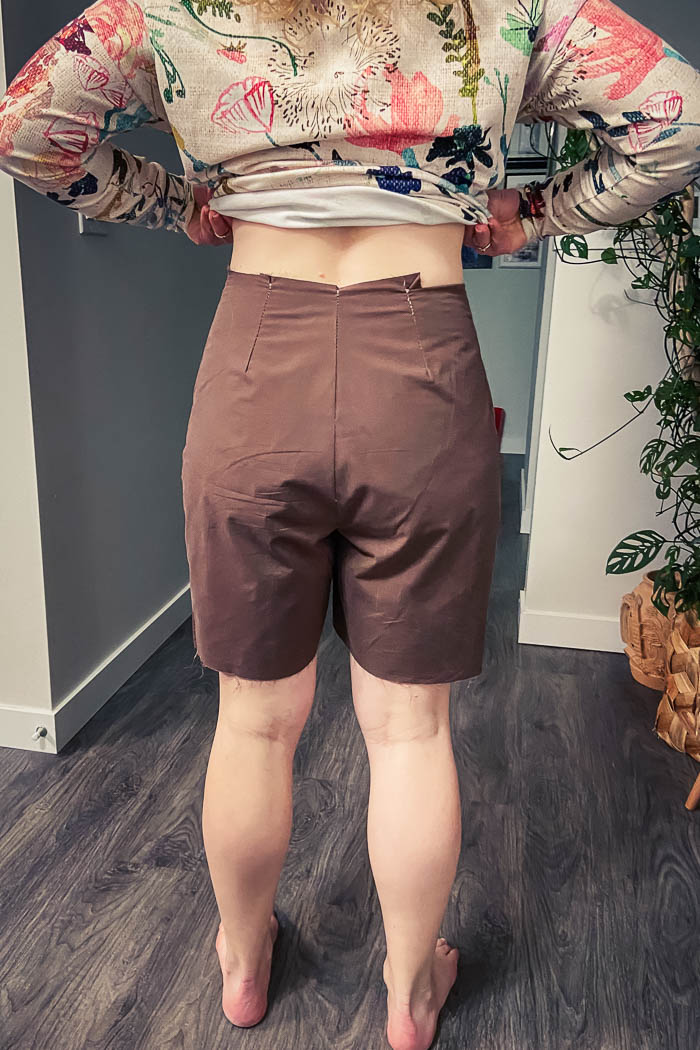
…. Or do I need to make some adjustments?
This question really sits with me. As I’ve walked through the virtual halls of the online sewing community I overhear one group making comments like “it’s badly drafted” and the others immediately asking what’s wrong with the pattern. A few steps further down the hall and someone else is saying they’ve found the perfect pattern and there’s gushing over the fact that a perfect pattern exists and how well drafted it must have been. Then we walk past the group that is deep in discussion about sway backs and full tummy adjustments showing endless pics of their behinds for people to help investigate what needs to be done with the pants they’re working on. You can picture these groups in the online hallway, can’t you?
You can probably imagine that when I tackle a new pattern, all these conversations come rolling into my mind and when I’m not careful, I can be sucked into the tunnel of fear that I better draft the perfect pattern or I’ll be named in those scathing posts about bad pattern companies. No designer wants to see their name in those posts, whether they deserve it or not. So this topic can paralyze me on some days as I feel an immense pressure that I have to be capable of producing personalized perfection.
As a designer who is self-taught, this topic is daunting. I share my status as self-taught with a good amount of hesitancy and vulnerability because in that virtual hallway I’ve also heard PLENTY of comments about designers who don’t know what they’re doing and people might walk away now that they know the extent of my training. But hold up!! Don’t walk away yet. I believe I deserve a chance.
I know in my head that bodies are all different, but working on this last test was really eye-opening for me as I saw it so clearly with this woven pant pattern. There’s no hiding behind knit fabric in this one!! My inner panic about selling a “perfectly drafted pattern” that would fit everyone turned into realization that it’s just not possible. So what do I do? What about all the cool kids that will expect it? How do I protect myself and my hard work from falling victim to someone else’s unrealistic expectations?
Well, we need to talk about and be part of the collective voice speaking about realities in sewing. There’s the overwhelming expectation in the sewing world that when we look for patterns we must find the ones that are made specifically for our body types and then we won’t have to worry about fitting issues. We chalk this magic up to “good drafting”. But is that really all it is?
Finding a company that has a block similar to our shape IS a great find. But if that’s our priority we’ll be limited to fewer companies and therefore fewer patterns. And think about it – Patterns with a draft height of 5’8″ should mean that you don’t need to worry about adding length…. or should you? Patterns drafted for an hourglass shape mean it’s going to hug your hourglass shape…. or will it? We often drastically underestimate just how unique each body is even within a group of people all with the same measurements and shape!!
So where should our focus be when we’re looking for patterns? Are we listening to the crowd gushing about perfectly drafted patterns or are we leaning in to the ones engrossed in FBAs and drag lines? I tend to think it should be a little of the first and mostly the latter. The first will warn you about companies that might not give you a good starting point, but the other will give you valuable knowledge that will open up your options and give you the best outcomes for YOU.
Keep your eyes and ears open for consistent feedback about pattern companies that don’t work well. Not just one or two bad posts by someone in a rage. We all know what a frustrating day in the sewing room feels like and some people choose to take that to social media before calming down. It really might not be a fair assessment of the pattern or the designer. Very often, it’s the frustrations of someone who expected a certain look without fairly considering the designer’s intention or expected to be able to cut into expensive fabric without making a muslin version first and going through the appropriate fit testing on themselves. On the other hand, well-explained, non-emotional descriptions of WHY they are calling out the pattern will give you a better idea of which ones to avoid and which ones might still deserve a try.
Who you listen to matters and there’s value in finding a trustworthy pattern company so, yes, listen to those conversations, but more importantly, look for the people that are talking about the drag lines and adjustments because in those groups you’ll find a level of expertise and curiosity that gets into the real “meat and potatoes” of sewing for ourselves. Because the truth is, more often than not, you need adjustments if you want the pattern to fit you well. Unfortunately, just because we don’t WANT to make a muslin first, doesn’t mean it’s not necessary.
I’ve had a few conversations with knowledgeable designers and design school instructors who have told me “fitting a pattern is the hardest part”. They’ve also said, “don’t adjust your pattern to fit your testers, teach your testers the importance of fitting”. Every time I felt myself being pulled in the direction of making adjustments to my pattern for something I saw on a few testers, I was reminded that the job of the designer is to provide a well-drafted pattern, not a personalized pattern.
Well-drafted. Are they telling me to make sure I give everyone a perfect pattern that never needs tweaking? They are not. That’s a personalized pattern. So then what IS a well-drafted pattern? I already told you I’m self-taught so you know I’m not going to be so bold as to assume I can fully answer this. There’s MUCH I don’t know. But what I’ve observed and believe to be important is well-tested starting blocks, good grading techniques of those blocks into the other sizes, and a commitment to the standard “body” you create with your size chart. One instructor said to me, “Your customer needs to be able to trust your block and that it doesn’t change with each pattern you make. It shouldn’t be perfected to one person’s body, it should match your standard.” It was a good reminder that our size chart is the standard to which we draft and we must use consistent grading that lines up with that standard in order to produce what I hope is a well-drafted pattern.
I’ll give you an example of something that I spent most of my sewing years assuming and then found was wrong. Maybe you have a similar story that you can share with us below.
I’m 5’2″ and when I saw a pattern drafted for a 5’5″ height I would assume that meant I just needed to remove some pant length and I’d be good to go. WRONG!!! Of course that height difference doesn’t apply to my legs alone. Further into my journey, I learned more and realized that those 3” needed to be dispersed throughout my body so I went on to assume that I needed to remove 1 1/2” length in my torso and 1 1/2” in my leg. Closer, but WRONG AGAIN!! My body is more than just my torso and legs.
Truth is, I do actually remove 1 1/2″ from the inseam, but what was wild for me to discover is that I needed to ADD 3/4″ height to the rise of the pants. Whoever thought that someone that much shorter than the draft height would be adding height anywhere!? Apparently I’m actually quite tall in my crotch length!! Who knew!? This was a one of those “wow” moments for my own personal fitting journey that I will now take with me.
I’ll “take it with me” in the sense that now I know I have to pay attention to the crotch length of pant patterns. Even though I know what I need to adjust based on the Sofiona size chart, other blocks may be different which means that I won’t assume MY expectations on someone else’s pattern. I’ll just know that I should check that measurement and see what my needed adjustment will be for that company’s block. I can confirm that this crotch length importance was also a wow moment to a lot of the Nickel pant testers as well. We were all learning together!!
This is just one simple example, but I hope you see the journey in that story. I didn’t go straight from a wrong fitting assumption to fully understanding my body. There were steps and in each one of the steps, I found a slightly better fit than before. I have no idea what I might learn next that will further enlighten me about my own fitting, but I’m open and willing to keep growing in knowledge about personalized adjustments.
The Miss Nickel test was a challenging experience for me because though I’m someone who is already amid learning the realities of fitting myself, now I’m also learning how to translate that growing wisdom into my drafting and design. I had ALL the emotions as I went through the whole Nickel pant process. From idea, to drafting, to testing, and especially making the last calls before release. Did I make the right decisions? Did I tweak the right curves? Did I read the right information that I decided to trust in my workflow? Is my pattern a trustworthy starting point for a great pair of pants for you!?
In the end, I do believe I’ve provided a great pattern and the testers’ final versions show it. Don’t be fooled into thinking that they all just whipped up a pair of pants without missing a beat. Every single one had some area that they needed to consider or even research for themselves and when they applied their research to their muslins, we saw incredible changes and improvements that they will take with them into their next garment making experience.
And this brings me to my final thoughts on another mistaken assumption I have made and now feel differently about. You can NOT expect to have perfectly fitting clothes if you stubbornly refuse to “waste your fabric” on a muslin. Sure, if you’re making a sweater or other loose-fitting garment, especially in knit fabric, you can almost always have something very wearable. Obviously, we all have items in our closets that we made without a trial run and we wear them often. And it’s also true that people can make something and find that they really don’t need to make any changes. But there’s a limit to where that happens and for those that want to elevate their sewing experience, we need to change our mindset about muslins.
Muslin or toile sewing is there to give you valuable information about your body. It shouldn’t be labelled as annoying and contemptible, and honestly, we should stop talking about it like it is. The more you hear people talk about how they hate doing it, you can bet you’re being affected by that messaging. This doesn’t mean it becomes the most fun part of sewing, but it means our mindset shifts. We spend less time freaking out over how we’re going to fix a garment that we rushed into making with our good fabric and rather spend more focused time learning and making a muslin. I promise you, once you get into a habit of making them, you realize that it’s actually quite quick and takes up WAYYYYY less time then seam-ripping a finished garment to make fixes you didn’t see coming.
I hope this got you thinking. About what you read, how you speak about patterns you’ve made (especially when you’ve had a bad experience), what your expectations are and where the line is between reality and wishful thinking. Because there IS a responsibility on the part of the designer. We need to do our due diligence in what we provide and sell. Then comes the responsibility of the sewists – to measure correctly, actually read the tutorial (both before and throughout the garment construction), and make a muslin to see where your body varies from the “standard” of that particular company block. After all that, it’s also the sewist’s responsibility to give objective feedback when required which increases the awareness in our sewing community about what is reality and how we can achieve an amazing outcome.
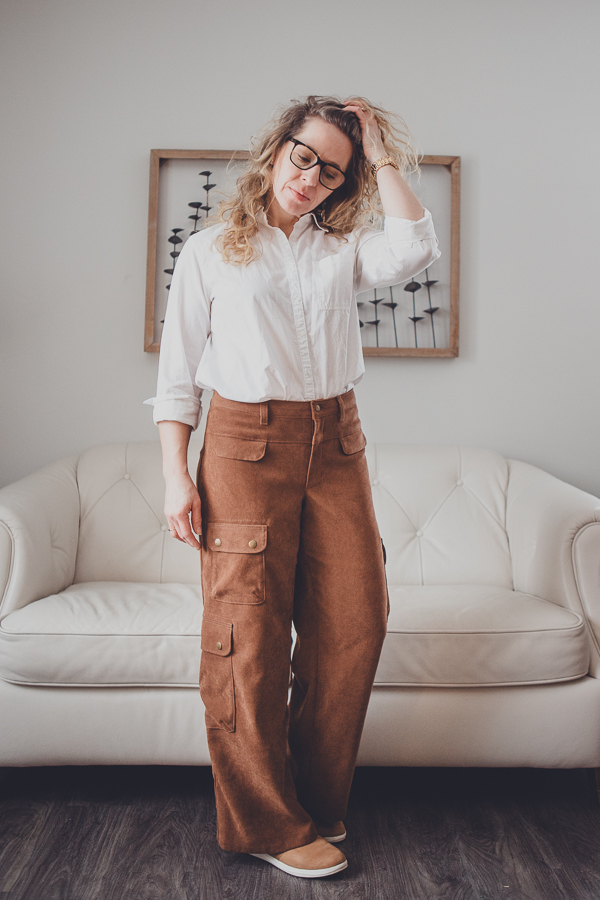
So, happy sewing. Happy fitting. Happy learning. 😊 And I leave you with some of the Miss Nickel pants I fitted and made for my daughters and myself while I was studying this latest chapter of Sherri’s sewing journey.


 I am Mami de Sofiona
This is such a beautifully written post – I love your writer’s voice! I also agree 100% with what you feel about drafting vs fitting adjustments. Thanks so much for feeling your thoughts on this worthwhile topic – and I am forever going to thing about virtual hallway conversations. Thanks for the imagery!
LikeLike
Thank you for the compliment. 😊 I’ve felt the push to encourage people to think deeper and push further in their own sewing. I hope this encourages a few.
LikeLike